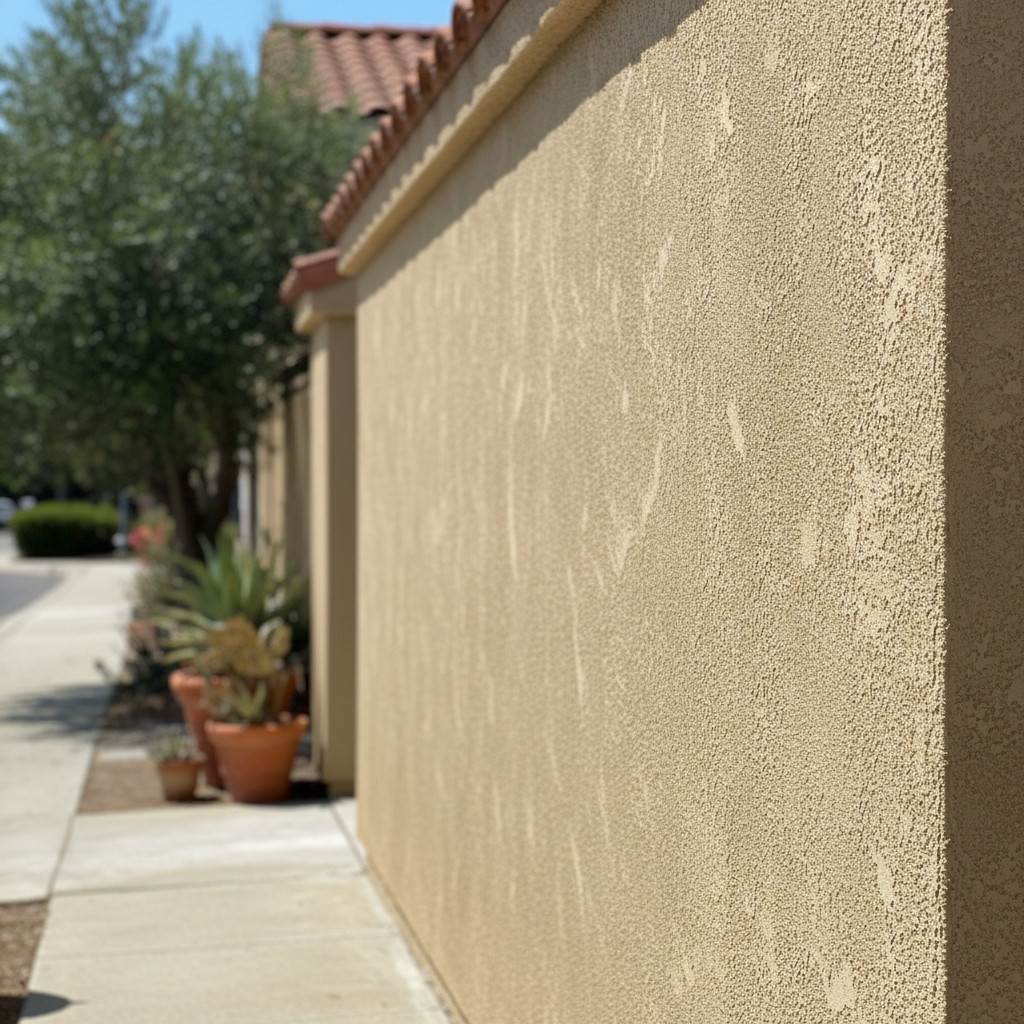
Ever walk around your house and actually look at the walls? Most people do not until a chunk falls off or water stains show up inside. Living here in Fullerton, our stucco takes a beating from the intense dry heat in the summer and those occasional heavy downpours that test every joint and flashing on the property. If you own an older home near the Sunny Hills neighborhood or a newer build closer to downtown, your exterior walls are working hard to protect your framing. Fullerton Stucco & Plastering will walk through how you can check your own stucco, what you can handle yourself, and when it is time to call in a professional to take a look.
Before You Start Looking
You do not need a cart full of expensive tools to check your exterior. Grab a clipboard, a notepad, and maybe a flashlight. Pick a dry afternoon when the sun hits the walls at an angle because shadows make cracks much easier to spot. Walk the entire perimeter of your house. Make sure bushes or stored items are not blocking your view of the lower walls. Stucco needs to breathe, and piling mulch or dirt against it invites moisture straight into the lath.
What You Can Check Yourself
Start scanning for hairline cracks. Every house gets them because concrete shrinks a bit as it cures and buildings settle over time. A crack smaller than the thickness of a credit card is usually cosmetic. You can clean those out and seal them with an elastomeric patch if you are handy on a Saturday afternoon. Tap gently on the surface with the plastic handle of a screwdriver. A solid wall makes a crisp clicking sound. If it sounds hollow, dull, or papery, the stucco has detached from the wire mesh underneath. That is called delamination, and paint will not fix it. Look closely around windows and doors too. Those corners take the most stress and are prime spots for water to sneak behind the finish coat during winter storms.
When to Put Down the Screwdriver
Once you find something bigger than a hairline crack, stop poking. If you see brown rust stains bleeding through the texture, that means the metal lath inside the wall is rusting from trapped moisture. Rust expands, which pushes the stucco outward and causes bigger breaks. If your screwdriver handle test reveals a large hollow zone, or if you spot soft, spongy areas near the foundation, you are past the DIY stage. Fixing structural water intrusion requires cutting out the damaged section, checking the building paper, and tying new wire and base coats into the existing wall so it does not leak again.
After the Inspection
If your inspection only turned up a few minor hairline fractures, grab some matching elastomeric caulk and seal them up before the next rainy season rolls around. Keep your sprinklers adjusted so they are not constantly soaking the base of your walls. If you found crumbling corners, widespread cracking, or hollow spots, write down where they are and take a few clear photos. Fullerton Stucco & Plastering will come out, take a proper look behind the surface, and give you an honest assessment of what it takes to get your exterior sealed up tight again.